Brass
Brass is an alloy of copper and zinc, in proportions which can be varied to achieve different colours and mechanical, electrical, acoustic and chemical properties, but copper typically has the larger proportion, generally 2⁄3 copper and 1⁄3 zinc. In use since prehistoric times, it is a substitutional alloy: atoms of the two constituents may replace each other within the same crystal structure.
Brass is similar to bronze, a copper alloy that contains tin instead of zinc. Both bronze and brass may include small proportions of a range of other elements including arsenic, lead, phosphorus, aluminium, manganese and silicon. Historically, the distinction between the two alloys has been less consistent and clear, and increasingly museums use the more general term "copper alloy".
Brass has long been a popular material for its bright gold-like appearance and is still used for drawer pulls and doorknobs. It has also been widely used to make sculpture and utensils because of its low melting point, high workability (both with hand tools and with modern turning and milling machines), durability, and electrical and thermal conductivity. Brasses with higher copper content are softer and more golden in colour; conversely those with less copper and thus more zinc are harder and more silvery in colour.
Brass is still commonly used in applications where corrosion resistance and low friction are required, such as locks, hinges, gears, bearings, ammunition casings, zippers, plumbing, hose couplings, valves, SCUBA regulators, and electrical plugs and sockets. It is used extensively for musical instruments such as horns and bells. The composition of brass makes it a favorable substitute for copper in costume jewelry and fashion jewelry, as it exhibits greater resistance to corrosion. Brass is not as hard as bronze and so is not suitable for most weapons and tools. Nor is it suitable for marine uses, because the zinc reacts with minerals in salt water, leaving porous copper behind; marine brass, with added tin, avoids this, as does bronze.
Brass is often used in situations in which it is important that sparks not be struck, such as in fittings and tools used near flammable or explosive materials.
Brass
Chemical composition Cu Zn x
Technical: CuZnX, where
X = zinc content in percent
Color Golden yellow; becoming lighter with increasing zinc content
Melting interval
1050–1065 °C (CuZn5)
902–920 °C (CuZn37)
decreasing with increasing zinc content
density 8.41 g/cm³ (CuZn40) to
8.86 g/cm³ (CuZn5)
electrical conductivity 33•10 6 S /m (CuZn5) to 15.5•10 6 S/m (CuZn37)
(decreasing with increasing zinc content)
Specific heat capacity about 377 J/(kg•K) (alloy-dependent)
Thermal conductivity 111 J/(kg K) at 20 °C
Linear thermal expansion coefficient 18.5 10 −6 /K at 20 °C (CuZn30)
Mechanically
Tensile strength 310 to 460 MPa (N/mm²)
Yield strength 120 to 420 MPa (N/mm²)
Elastic modulus 78 to 123 GPa (kN/mm²)
Poisson's ratio 0.37
Torsion modulus 37 GPa (kN/mm²)
speed of sound 4430 m/s
Etymology
The origin of the word brass is not entirely clear, although the alloy was already known to Aristotle (384–322 BC) because of its gold-like appearance. Some explanations trace the name back even further to a people in Colchis who were called Mossynoics (wooden tower dwellers), others see a relationship to the Latin massa, meaning a lump of metal on the open hearth. Brass became widespread as a collective term for alloys based on copper and zinc. Tombake, copper-zinc alloys with a copper content of always >80%, achieved greater fame. The name is said to derive from the Malay tembaga, 'copper'.
Written evidence of the use of brass comes from Cicero, among others, who complained in his De officiis that the immorality of many traders led them to sell brass instead of gold. The use of the word orihalkos (aurichalkum) for brass is also documented in Pliny the Elder's Naturalis historia. Pliny the Elder also recorded the manufacture of brass from the components copper and the zinc-containing mineral calamine (smithsonite, also known as noble calamine Zn) as well as moistened coal dust added to reduce the calamine. These components were blended and the mixture placed in several crucibles - usually seven to nine per kiln. The mixture was then heated to melting point (> 900°C). This process, which lasted about 12 hours and is now known as cementation, produced raw brass, also called arco, which was then poured together for a second melting process to increase quantity and quality. This applied at that time to both ancient Greece and the Roman Empire – and this without any precise knowledge of the gold-like alloy composition.
Between the 1st and 4th centuries AD, the Romans also practiced the process of brass production described by Pliny in the areas of Germania they occupied.
Centers of medieval brass processing (yellow brass or gunmetal) were the Meuse Valley, Flanders, Brabant, and Aachen. In the Meuse Valley, there were deposits of calamine, which was processed into brass with imported copper, so that from the 14th century onward, all products from this region were called Dinanderie after the capital city of Dinant.
Famous, often figuratively decorated castings of the Romanesque period are sometimes made of brass (even if the material is often referred to as bronze, from which it is not always easy to distinguish externally): the baptismal font of Reiner von Huy in Liège (1107–1118), the Cappenberg head or the candlestick in the Milan Cathedral (around 1200) are among them, as are numerous church furnishings: lavabo kettles and basins, jugs and aquamanilia, holy water buckets and incense burners, lecterns, engraved gravestones (Netherlands, England), chandeliers, and later in the secular area also jugs, bowls and other household items.
Since the late Middle Ages, vessels made of sheet metal have become more common, initially the cymbal bowls of the 15th and especially the 16th centuries, and later all kinds of household utensils such as jugs, kettles, chafing dishes, tobacco tins, bedpans, scales, candlesticks, trays, frames, fittings, and much more. In pre-industrial times, however, cast brass was used to make not only fittings of all kinds, but also table candlesticks, weights, table bells, mortars, taps, door knockers, and scientific and nautical instruments.
History
Although forms of brass have been in use since prehistory, its true nature as a copper-zinc alloy was not understood until the post-medieval period because the zinc vapor which reacted with copper to make brass was not recognized as a metal. The King James Bible makes many references to "brass" to translate "nechosheth" (bronze or copper) from Hebrew to English. The earliest brasses may have been natural alloys made by smelting zinc-rich copper ores. By the Roman period brass was being deliberately produced from metallic copper and zinc minerals using the cementation process, the product of which was calamine brass, and variations on this method continued until the mid-19th century. It was eventually replaced by speltering, the direct alloying of copper and zinc metal which was introduced to Europe in the 16th century.
Early copper-zinc alloys
In West Asia and the Eastern Mediterranean early copper-zinc alloys are now known in small numbers from a number of 3rd millennium BC sites in the Aegean, Iraq, the United Arab Emirates, Kalmykia, Turkmenistan and Georgia and from 2nd millennium BC sites in western India, Uzbekistan, Iran, Syria, Iraq and Canaan. Isolated examples of copper-zinc alloys are known in China from the 1st century AD, long after bronze was widely used. The hilt of Sirohi swords were made up of brass in India.
The compositions of these early "brass" objects are highly variable and most have zinc contents of between 5% and 15% wt which is lower than in brass produced by cementation. These may be "natural alloys" manufactured by smelting zinc rich copper ores in redox conditions. Many have similar tin contents to contemporary bronze artefacts and it is possible that some copper-zinc alloys were accidental and perhaps not even distinguished from copper. However the large number of copper-zinc alloys now known suggests that at least some were deliberately manufactured and many have zinc contents of more than 12% wt which would have resulted in a distinctive golden colour.
By the 8th–7th century BC Assyrian cuneiform tablets mention the exploitation of the "copper of the mountains" and this may refer to "natural" brass. "Oreikhalkon" (mountain copper), the Ancient Greek translation of this term, was later adapted to the Latin aurichalcum meaning "golden copper" which became the standard term for brass. In the 4th century BC Plato knew orichalkos as rare and nearly as valuable as gold and Pliny describes how aurichalcum had come from Cypriot ore deposits which had been exhausted by the 1st century AD. X-ray fluorescence analysis of 39 orichalcum ingots recovered from a 2,600-year-old shipwreck off Sicily found them to be an alloy made with 75–80% copper, 15–20% zinc and small percentages of nickel, lead and iron.
Roman world
During the later part of first millennium BC the use of brass spread across a wide geographical area from Britain and Spain in the west to Iran, and India in the east. This seems to have been encouraged by exports and influence from the Middle East and eastern Mediterranean where deliberate production of brass from metallic copper and zinc ores had been introduced. The 4th century BC writer Theopompus, quoted by Strabo, describes how heating earth from Andeira in Turkey produced "droplets of false silver", probably metallic zinc, which could be used to turn copper into oreichalkos. In the 1st century BC the Greek Dioscorides seems to have recognized a link between zinc minerals and brass describing how Cadmia (zinc oxide) was found on the walls of furnaces used to heat either zinc ore or copper and explaining that it can then be used to make brass.
By the first century BC brass was available in sufficient supply to use as coinage in Phrygia and Bithynia, and after the Augustan currency reform of 23 BC it was also used to make Roman dupondii and sestertii. The uniform use of brass for coinage and military equipment across the Roman world may indicate a degree of state involvement in the industry, and brass even seems to have been deliberately boycotted by Jewish communities in Palestine because of its association with Roman authority.
Brass was produced by the cementation process where copper and zinc ore are heated together until zinc vapor is produced which reacts with the copper. There is good archaeological evidence for this process and crucibles used to produce brass by cementation have been found on Roman period sites including Xanten and Nidda in Germany, Lyon in France and at a number of sites in Britain. They vary in size from tiny acorn sized to large amphorae like vessels but all have elevated levels of zinc on the interior and are lidded. They show no signs of slag or metal prills suggesting that zinc minerals were heated to produce zinc vapor which reacted with metallic copper in a solid state reaction. The fabric of these crucibles is porous, probably designed to prevent a buildup of pressure, and many have small holes in the lids which may be designed to release pressure or to add additional zinc minerals near the end of the process. Dioscorides mentioned that zinc minerals were used for both the working and finishing of brass, perhaps suggesting secondary additions.
Brass made during the early Roman period seems to have varied between 20% and 28% wt zinc. The high content of zinc in coinage and brass objects declined after the first century AD and it has been suggested that this reflects zinc loss during recycling and thus an interruption in the production of new brass. However it is now thought this was probably a deliberate change in composition and overall the use of brass increases over this period making up around 40% of all copper alloys used in the Roman world by the 4th century AD.
Medieval period
Little is known about the production of brass during the centuries immediately after the collapse of the Roman Empire. Disruption in the trade of tin for bronze from Western Europe may have contributed to the increasing popularity of brass in the east and by the 6th–7th centuries AD over 90% of copper alloy artefacts from Egypt were made of brass. However other alloys such as low tin bronze were also used and they vary depending on local cultural attitudes, the purpose of the metal and access to zinc, especially between the Islamic and Byzantine world. Conversely the use of true brass seems to have declined in Western Europe during this period in favor of gunmetals and other mixed alloys but by about 1000 brass artefacts are found in Scandinavian graves in Scotland, brass was being used in the manufacture of coins in Northumbria and there is archaeological and historical evidence for the production of calamine brass in Germany and the Low Countries, areas rich in calamine ore.
These places would remain important centres of brass making throughout the Middle Ages period, especially Dinant. Brass objects are still collectively known as dinanderie in French. The baptismal font at St Bartholomew's Church, Liège in modern Belgium (before 1117) is an outstanding masterpiece of Romanesque brass casting, though also often described as bronze. The metal of the early 12th-century Gloucester Candlestick is unusual even by medieval standards in being a mixture of copper, zinc, tin, lead, nickel, iron, antimony and arsenic with an unusually large amount of silver, ranging from 22.5% in the base to 5.76% in the pan below the candle. The proportions of this mixture may suggest that the candlestick was made from a hoard of old coins, probably Late Roman. Latten is a term for medieval alloys of uncertain and often variable composition often covering decorative borders and similar objects cut from sheet metal, whether of brass or bronze. Especially in Tibetan art, analysis of some objects shows very different compositions from different ends of a large piece. Aquamaniles were typically made in brass in both the European and Islamic worlds.
The cementation process continued to be used but literary sources from both Europe and the Islamic world seem to describe variants of a higher temperature liquid process which took place in open-topped crucibles. Islamic cementation seems to have used zinc oxide known as tutiya or tutty rather than zinc ores for brass-making, resulting in a metal with lower iron impurities. A number of Islamic writers and the 13th century Italian Marco Polo describe how this was obtained by sublimation from zinc ores and condensed onto clay or iron bars, archaeological examples of which have been identified at Kush in Iran. It could then be used for brass making or medicinal purposes. In 10th century Yemen al-Hamdani described how spreading al-iglimiya, probably zinc oxide, onto the surface of molten copper produced tutiya vapor which then reacted with the metal. The 13th century Iranian writer al-Kashani describes a more complex process whereby tutiya was mixed with raisins and gently roasted before being added to the surface of the molten metal. A temporary lid was added at this point presumably to minimize the escape of zinc vapor.
In Europe a similar liquid process in open-topped crucibles took place which was probably less efficient than the Roman process and the use of the term tutty by Albertus Magnus in the 13th century suggests influence from Islamic technology. The 12th century German monk Theophilus described how preheated crucibles were one sixth filled with powdered calamine and charcoal then topped up with copper and charcoal before being melted, stirred then filled again. The final product was cast, then again melted with calamine. It has been suggested that this second melting may have taken place at a lower temperature to allow more zinc to be absorbed. Albertus Magnus noted that the "power" of both calamine and tutty could evaporate and described how the addition of powdered glass could create a film to bind it to the metal. German brass making crucibles are known from Dortmund dating to the 10th century AD and from Soest and Schwerte in Westphalia dating to around the 13th century confirm Theophilus' account, as they are open-topped, although ceramic discs from Soest may have served as loose lids which may have been used to reduce zinc evaporation, and have slag on the interior resulting from a liquid process.
Africa
Some of the most famous objects in African art are the lost wax castings of West Africa, mostly from what is now Nigeria, produced first by the Kingdom of Ife and then the Benin Empire. Though normally described as "bronzes", the Benin Bronzes, now mostly in the British Museum and other Western collections, and the large portrait heads such as the Bronze Head from Ife of "heavily leaded zinc-brass" and the Bronze Head of Queen Idia, both also British Museum, are better described as brass, though of variable compositions. Work in brass or bronze continued to be important in Benin art and other West African traditions such as Akan goldweights, where the metal was regarded as a more valuable material than in Europe.
Renaissance and post-medieval Europe
The Renaissance saw important changes to both the theory and practice of brassmaking in Europe. By the 15th century there is evidence for the renewed use of lidded cementation crucibles at Zwickau in Germany. These large crucibles were capable of producing c.20 kg of brass. There are traces of slag and pieces of metal on the interior. Their irregular composition suggests that this was a lower temperature, not entirely liquid, process. The crucible lids had small holes which were blocked with clay plugs near the end of the process presumably to maximize zinc absorption in the final stages. Triangular crucibles were then used to melt the brass for casting.
16th-century technical writers such as Biringuccio, Ercker and Agricola described a variety of cementation brass making techniques and came closer to understanding the true nature of the process noting that copper became heavier as it changed to brass and that it became more golden as additional calamine was added. Zinc metal was also becoming more commonplace. By 1513 metallic zinc ingots from India and China were arriving in London and pellets of zinc condensed in furnace flues at the Rammelsberg in Germany were exploited for cementation brass making from around 1550.
Eventually it was discovered that metallic zinc could be alloyed with copper to make brass, a process known as speltering, and by 1657 the German chemist Johann Glauber had recognized that calamine was "nothing else but unmeltable zinc" and that zinc was a "half ripe metal". However some earlier high zinc, low iron brasses such as the 1530 Wightman brass memorial plaque from England may have been made by alloying copper with zinc and include traces of cadmium similar to those found in some zinc ingots from China.
However, the cementation process was not abandoned, and as late as the early 19th century there are descriptions of solid-state cementation in a domed furnace at around 900–950 °C and lasting up to 10 hours. The European brass industry continued to flourish into the post medieval period buoyed by innovations such as the 16th century introduction of water powered hammers for the production of wares such as pots. By 1559 the Germany city of Aachen alone was capable of producing 300,000 cwt of brass per year. After several false starts during the 16th and 17th centuries the brass industry was also established in England taking advantage of abundant supplies of cheap copper smelted in the new coal fired reverberatory furnace. In 1723 Bristol brass maker Nehemiah Champion patented the use of granulated copper, produced by pouring molten metal into cold water. This increased the surface area of the copper helping it react and zinc contents of up to 33% wt were reported using this new technique.
In 1738 Nehemiah's son William Champion patented a technique for the first industrial scale distillation of metallic zinc known as distillation per descencum or "the English process". This local zinc was used in speltering and allowed greater control over the zinc content of brass and the production of high-zinc copper alloys which would have been difficult or impossible to produce using cementation, for use in expensive objects such as scientific instruments, clocks, brass buttons and costume jewelry. However Champion continued to use the cheaper calamine cementation method to produce lower-zinc brass and the archaeological remains of bee-hive shaped cementation furnaces have been identified at his works at Warmley. By the mid-to-late 18th century developments in cheaper zinc distillation such as John-Jaques Dony's horizontal furnaces in Belgium and the reduction of tariffs on zinc as well as demand for corrosion-resistant high zinc alloys increased the popularity of speltering and as a result cementation was largely abandoned by the mid-19th century.
Properties
Brass is more malleable than bronze or zinc. The relatively low melting point of brass (900 to 940 °C; 1,650 to 1,720 °F, depending on composition) and its flow characteristics make it a relatively easy material to cast. By varying the proportions of copper and zinc, the properties of the brass can be changed, allowing hard and soft brasses. The density of brass is 8.4 to 8.73 g/cm3 (0.303 to 0.315 lb/cu in).
Today, almost 90% of all brass alloys are recycled. Because brass is not ferromagnetic, ferrous scrap can be separated from it by passing the scrap near a powerful magnet. Brass scrap is melted and recast into billets that are extruded into the desired form and size. The general softness of brass means that it can often be machined without the use of cutting fluid, though there are exceptions to this.
Aluminium makes brass stronger and more corrosion-resistant. Aluminium also causes a highly beneficial hard layer of aluminium oxide (Al2O3) to be formed on the surface that is thin, transparent, and self-healing. Tin has a similar effect and finds its use especially in seawater applications (naval brasses). Combinations of iron, aluminium, silicon, and manganese make brass wear- and tear-resistant. The addition of as little as 1% iron to a brass alloy will result in an alloy with a noticeable magnetic attraction.
Brass will corrode in the presence of moisture, chlorides, acetates, ammonia, and certain acids. This often happens when the copper reacts with sulfur to form a brown and eventually black surface layer of copper sulfide which, if regularly exposed to slightly acidic water such as urban rainwater, can then oxidize in air to form a patina of green-blue copper carbonate. Depending on how the patina layer was formed, it may protect the underlying brass from further damage.
Although copper and zinc have a large difference in electrical potential, the resulting brass alloy does not experience internalized galvanic corrosion because of the absence of a corrosive environment within the mixture. However, if brass is placed in contact with a more noble metal such as silver or gold in such an environment, the brass will corrode galvanically; conversely, if brass is in contact with a less-noble metal such as zinc or iron, the less noble metal will corrode and the brass will be protected.
Characteristics
Brass is slightly harder than pure copper, but not as hard as bronze. Its melting point is lower than that of bronze and decreases with increasing zinc content. Unlike copper or aluminum, there is no gas content in the melt that would impair the quality of the castings. The vapor pressure of the zinc, which exists at temperatures around 900°C, acts like a purge degassing. The escaping zinc immediately turns into fine-flaky zinc oxide in the air, which, as zinc fume, is a nuisance during casting and is also harmful if inhaled (metal fume fever). A protective covering using suitable mixtures counteracts this.
Brass is non-magnetic, meaning it is generally unaffected by magnetic fields and does not spark. Therefore, it is used for special tools.
Unlike steel and many aluminum alloys, brass cannot be hardened by heat treatment. The achievable strength values are determined by the alloy composition.
At zinc contents up to a maximum mass fraction of 37%, the alloys are cold-formable, as only the alpha phase is present (wrought alloys). With increasing zinc mass fraction, the beta phase appears, and hot forming is only possible at temperatures > 600 °C.
Phases and structures
Zinc is only slightly soluble in copper due to the different crystal systems. Industrially usable brasses contain between 5 and a maximum of 45 percent zinc.
Zinc dissolves in solid copper without structural change up to a maximum of 32.5%, forming a face-centered cubic (fcc) substitution solid solution known as the α-phase or α-brass. The solidus curve decreases in the pure α-phase range from 1083.62 °C (0% Zn) to 902 °C (32.5% Zn).
In the range of mass fractions between 32.5% and 36.8% zinc, a β-phase is formed in addition to the α-phase, which solidifies in a body-centered cubic (bcc) lattice. However, up to about 37% zinc, the β-phase transforms back into the α-phase at lower temperatures.
Alloys with mass fractions of approximately 50% copper and 50% zinc crystallize in either the β-phase or the β'-phase: At temperatures below 468 °C, the β'-phase is stable, in which eight copper atoms surround eight zinc atoms, forming the cesium chloride structure. Above 468 °C, in the β-phase, the atoms are randomly distributed among lattice sites of a body-centered cubic lattice.
Above 50% zinc by mass, further intermetallic Hume-Rothery phases occur: the γ-, δ-, and ε-phases. From a zinc content of 97.25%, the hexagonal structure of zinc is possible. However, since the γ-phase is characterized by extreme brittleness, such alloys are technically unusable.
Types
Common brass types differ in their zinc content, which is indicated as a percentage in the name. In practice, however, all brass alloys contain at least 58 percent copper, as below this level they become brittle and difficult to process.
Cast parts are collectively known as cast brass. The most commonly used alloy is CuZn37, which has a zinc content of 37% by mass. The previous nomenclature used the designation Ms followed by the copper content, in this case Ms 63.
Brass can contain up to 3% lead by mass. With a significantly higher lead content, the alloy falls into the category of special brasses, which may also contain other elements.
The CuZn30 alloy exhibits the best plastic formability of all brass types. Because of its high elongation at fracture, it was often used in the past to make cartridges for artillery shells, which is why this alloy is also colloquially known as cartridge brass.
Tombac
Tombac refers to brass types with more than 67% copper by mass. Tombac is mainly used for arts and crafts purposes and, depending on the copper content, is sold under the trade names red tombac (90% Cu), gold or medium tombac (85% Cu), and yellow tombac (72% Cu). The 5- and 10- pfennig coins minted until 2001 during the German Mark era were made of steel clad with tombac. Tombac is also used as a jacket for pistol and rifle projectiles, where it encases the inner, softer lead core.
Silicon tombac is not a tombac, but rather a diverse range of special brasses. White copper, also known as white tombac, is not a copper-zinc alloy, but a copper- arsenic alloy—in other words, not a type of brass, but an (arsenic) bronze.
Gold brass
A number of brass instruments are often made of gold brass (actually gold tombac) and are sometimes electroplated with silver.
Table brass
Plate brass is used in watchmaking for gears stamped from sheet metal and other parts. Decorative elements, including classic military items (helmets, breastplates), were also made from plate brass. Before the advent of small-caliber, high-velocity ammunition, it was also used to clad steel-jacketed bullets for rifles and pistols, as it imparted better spin to the projectile in rifled barrels. In jewelry, plate brass was used as a gold substitute.
Talmigold
The alloy used as talmigold for cheap jewelry is not gold tombac, but a gunmetal alloy made of copper, zinc, tin and lead, which is gold-plated, for example as oxidation protection (gold does not tarnish) or to deceive buyers.
yellow cast iron
Yellow cast iron was formerly used to describe alloys containing 56 to 80 percent copper, thus clearly distinguishing it from gunmetal and bronze. Yellow casters even had their own guild.
Copper contents of 58% to 60% distinguish the area of so-called wrought brass alloys from that of cast alloys. The industrially important lead-containing machining brasses (also called free-cutting brass) belong to the wrought alloys. They have a different crystal lattice structure (bcc and no longer fcc) than brass with a Zn content of up to 38.95% and can contain lead in fine droplets as a chip breaker. The lead does not dissolve in the crystal lattice, but is present as a finely dispersed phase. The lead contents vary between 0.5% and a maximum of 3.5%. The more lead the material contains, the easier it is to machine and the finer the chips are. Lead contents of more than 3.5% only slightly improve machinability but cause problems when melting the alloy.
Special brass
Copper-zinc-based alloys to which additional alloying elements are added (lead > 3%, silicon, iron, nickel, manganese, or aluminum) are referred to as special brasses. A well-known copper-zinc-nickel alloy is nickel silver. The special brass type with the greatest structural relevance is silicon tombac; its high strength values and good castability in gravity die casting and pressure die casting make this alloy suitable for series and mass production of structural components.
Other types of brass
For further brass types see: Chrysorin, Cuivrepoli, Delta metal, Duran metal, Nordic gold, Prinzmetal (folk etymologically transformed from bronze), Rauschgold, Platine, Muntz metal (yellow metal), Potin jaune
| Class | Proportion by weight (%) | Notes | |
|---|---|---|---|
| Copper | Zinc | ||
| Alpha brasses | > 65 | <35 | Alpha brasses are malleable, can be worked cold, and are used in pressing, forging, or similar applications. They contain only one phase, with face-centred cubic crystal structure. With their high proportion of copper, these brasses have a more golden hue than others. The alpha phase is a substitution solid solution of zinc in copper. It is close in properties to copper, tough, strong, and somewhat difficult to machine. Best formability is with 32% of zinc. Corrosion-resistant red brasses, with 15% of zinc or less, belong here. |
| Alpha-beta brasses | 55–65 | 35–45 | Also called duplex brasses, these are suited for hot working. They contain both α and β' phases; the β'-phase is ordered body-centred cubic, with zinc atoms in the centre of the cubes, and is harder and stronger than α. Alpha-beta brasses are usually worked hot. The higher proportion of zinc means these brasses are brighter than alpha brasses. At 45% of zinc the alloy has the highest strength. |
| Beta brasses | 50–55 | 45–50 | Beta brasses can only be worked hot, and are harder, stronger, and suitable for casting. The high zinc-low copper content means these are some of the brightest and least-golden of the common brasses. |
| Gamma brasses | 33–39 | 61–67 | There are also Ag-Zn and Au-Zn gamma brasses, Ag 30–50%, Au 41%. The gamma phase is a cubic-lattice intermetallic compound, Cu5Zn8. |
| White brass | <50 | > 50 | These are too brittle for general use. The term may also refer to certain types of nickel silver alloys as well as Cu-Zn-Sn alloys with high proportions (typically 40%+) of tin and/or zinc, as well as predominantly zinc casting alloys with copper additives. These have virtually no yellow colouring at all, and instead have a much more silvery appearance. |
Other phases than α, β and γ are ε, a hexagonal intermetallic CuZn3, and η, a solid solution of copper in zinc.
Brass alloys
Copper crystallizes in the cubic crystal system with a face-centered cubic structure (crystal class: hexakisoctahedral  ). Its melting point is 1083.62 °C (boiling point: (2927 °C) and its density is 8.96 g/cm³.
). Its melting point is 1083.62 °C (boiling point: (2927 °C) and its density is 8.96 g/cm³.Zinc, on the other hand, crystallizes in the hexagonal crystal system with hexagonal closest packing (crystal class: dihexagonal-dipyramidal 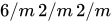 ) and melts at 419.53 °C. Even its boiling point of 907 °C is significantly lower than the melting point of copper. However, the density of zinc, at 7.14 g/cm³, is relatively similar to that of copper.
) and melts at 419.53 °C. Even its boiling point of 907 °C is significantly lower than the melting point of copper. However, the density of zinc, at 7.14 g/cm³, is relatively similar to that of copper.Despite the significant differences in melting behavior and crystal structure, copper and zinc are capable of forming solid solutions, or more precisely, substitutional solid solutions. However, because zinc has a slightly larger atomic diameter, the unit cell of copper is distorted and strained by the incorporated zinc atoms, which is the reason for the greater hardness of brass compared to pure copper.
Despite their widely differing melting points, alloying the two metals in molten form is also not particularly difficult. It is only necessary to ensure that the melt does not overheat and that it is processed as quickly as possible after reaching the casting temperature to avoid uncontrolled zinc burn-off.
Additionally, the melt surface must be covered to prevent excessive oxidation due to atmospheric oxygen absorption. Suitable covering materials include dry quartz sand, charcoal, and crushed glass. In a dry and well -coked state, charcoal also has the advantage of effectively preventing zinc erosion.
| Alloy name | Proportion by weight (%) | Other | Notes | |||
|---|---|---|---|---|---|---|
| Copper | Zinc | Tin | Lead | |||
| Abyssinian gold (Commercial bronze [C220]) | 90 | 10 | ||||
| Admiralty brass | 69 | 30 | 1 | Tin inhibits loss of zinc in many environments. | ||
| Aich's alloy | 60.66 | 36.58 | 1.02 | 1.74% iron | Designed for use in marine service owing to its corrosion resistance, hardness and toughness. A characteristic application is to the protection of ships' bottoms, but more modern methods of cathodic protection have rendered its use less common. Its appearance resembles that of gold. | |
| Aluminium brass | 77.5 | 20.5 | 2% aluminium | Aluminium improves corrosion resistance. It is used for heat exchanger and condenser tubes. | ||
| Arsenical brass | Arsenic; frequently aluminium | Used for boiler fireboxes. | ||||
| Arsenical brass 259 | 70 | 29.5 | ≤0.05 | Arsenic 0.2-0.6, Iron ≤0.05 | Heat exchangers, plumbing requiring excellent corrosion resistance in water. | |
| Brastil | - | - | - | - | Copper, Silicon, Zinc | An alloy of copper, zinc, and silicon which has an incredibly high tensile strength and is corrosion resistant. Doehler Die Casting Co. of Toledo, Ohio were known for the production of Brastil. It was notably tested in 1932 on an M1911 pistol as it was cheaper than steel at the time as a cost-effective measure. |
| California lead-free brass | <0.25 | Defined by California Assembly Bill AB 1953 contains "not more than 0.25 percent lead content". Prior upper limit was 4%. | ||||
| Cartridge brass (C260) | 70 | 30 | — | ≤ 0.07 | Good cold working properties. Used for ammunition cases, plumbing, and hardware. | |
| Common brass | 63 | 37 | Also called rivet brass. Cheap and standard for cold working. | |||
| DZR brass | Arsenic | Dezincification resistant brass with a small percentage of arsenic. | ||||
| Delta metal | 55 | 41–43 | 1–3% iron with the balance consisting of various other metals. | The proportions used make the material harder and suitable for valves and bearings. | ||
| Free machining brass (C360) | 61.5 | 35.5 | 2.5–3.7 | 0.35% iron | Also called 360 or C360 brass. High machinability. | |
| Gilding metal | 95 | 5 | Softest type of brass commonly available. Gilding metal is typically used for ammunition bullet "jackets"; e.g., full metal jacket bullets. Almost red in colour. | |||
| Gunmetal | 88 | 10 | 2 | E.g. British Admiralty gunmetal. Has variations. | ||
| High brass | 65 | 35 | Has a high tensile strength and is used for springs, screws, and rivets. | |||
| Leaded brass | > 0 | An alpha-beta brass with an addition of lead for improved machinability. | ||||
| Low brass | 80 | 20 | Light golden colour, very ductile; used for flexible metal hoses and metal bellows. | |||
| Manganese brass | 77 | 12 | 7% manganese, 4% nickel | Used as cladding for United States golden dollar coins. Other manganese brass alloy compositions exist. | ||
| Muntz metal | 60 | 40 | Traces of iron | Used as a lining on boats. | ||
| Naval brass (C464) | 59 | 40 | 1 | Similar to admiralty brass. Also known as Tobin bronze, 464, or C464. | ||
| Naval brass, high lead (C485) | 60.5 | 37.5 | 1.8 | 0.7 | Naval brass with added lead for machinability. Also known as 485, or C485. | |
| Nickel brass | 70–76 | 20–24.5 | 4–5.5% nickel | The outer ring of the bi-metallic one pound and two pound sterling coins and the one euro coin, plus the centre part of the two euro coin. Formerly used for the round one pound coin. | ||
| Nordic gold | 89 | 5 | 1 | 5% aluminum | Used in 10, 20, and 50 cents euro coins. | |
| Orichalcum | 75-80 | 15-20 | Trace | Trace amounts of nickel and iron | Determined from 39 ingots recovered from an ancient shipwreck in Gela, Sicily. | |
| Pinchbeck | 89% or 93% | 11% or 7% | Invented in the early 18th century by Christopher Pinchbeck. Resembles gold to a point where people can buy the metal as budget gold "effect" jewelry. | |||
| Prince's metal | 75 | 25 | A type of alpha brass. Due to its yellow colour, it is used as an imitation of gold. Also called Prince Rupert's metal, the alloy was named after Prince Rupert of the Rhine. | |||
| ounce metal | 85 | 5 | 5 | 5 | Sometimes called "red brass" | |
| copper alloy C23000 | 84–85.9 | 14-16 | minimum 0.07% | minimum 0.05% iron | Sometimes called "red brass" | |
| Red brass, Rose brass (C230) | 85 | 5 | 5 | 5 | Both an American term for the copper-zinc-tin alloy known as gunmetal, and an alloy which is considered both a brass and a bronze. Red brass is also an alternative name for copper alloy C23000, which is composed of 14–16% zinc, a minimum 0.05% iron and minimum 0.07% lead content, and the remainder copper. It may also refer to ounce metal (Cu 85.0, Zn 5.0, Pb 5.0, Sn 5.0). | |
| Rich low brass, Tombac | 80-97 | 5–20 | Often used in jewelry applications. Many variations. | |||
| Silicon tombac | 80 | 16 | 4% silicon | Used as an alternative for investment cast steel parts. | ||
| Tonval brass | > 0 | Also called CW617N or CZ122 or OT58. It is not recommended for sea water use, being susceptible to dezincification. | ||||
| Yellow brass | 67 | 33 | An American term for 33% zinc brass. | |||
Brass as a mineral
Currently (as of 2011) the International Mineralogical Association (IMA) recognizes two copper-zinc alloys as independent minerals: zhanghengite (β-brass) and danbaite (CuZn 2). In the 9th edition of Strunz's classification of minerals, used by the IMA, they are classified in the mineral class of elements and there in the division of metals and intermetallic compounds. There, they belong to the brass group with the system number 1.AB.10 within the zinc- brass family, together with the minerals (N) α-brass, β'-brass, γ- brass, ε-brass, η-brass, tongxinite, and zinc copperite, which have been published without IMA verification.
Editing
Brass is easy to machine. Free-cutting brass with a copper content of 58% and a lead content of 1–3% is particularly suitable for machining operations such as sawing, turning, milling, and drilling. Tools with a small rake angle are used: for Brass 58: 0–5°, for Brass 73: 5–15°, at cutting speeds of up to 70 m/s for high-speed steel tools and up to 600 m/s for carbide tools. Brass is also easy to grind, polish, and mirror-finish.
The cold formability of brass improves with the higher the copper content. The hardness caused by bending, hammering, pressing, and deep drawing can be removed by annealing at approximately 600°C. Quenching with water is not necessary.
Surface treatment
A mirror-smooth surface can be achieved simply by turning and milling. Polishing can further enhance the shine. Brass is also often brushed.
Burnishing (browning) brass is a surface treatment with vinegar essence. The workpieces are dipped or coated with a brush. This chemical transformation of the brass creates a thin conversion layer. This layer protects the metal. Burnishing is also used to visually enhance objects, for example, to create an antique look, for example, on furniture fittings and screws.
Tarnishing and verdigris
Brass tarnishes and becomes dull and brownish (oxidation). A household remedy for removing it is a paste of lemon juice and salt or baking soda as a gentle abrasive. A coating of shellac protects against tarnishing. As with all copper materials, verdigris forms through contact with carbon dioxide and sulfur dioxide in the air. It can be removed by soaking it in petroleum and rubbing it.
Use
As long as copper had to be melted together with sphalerite to produce brass, sophisticated applications were impossible. The focus was primarily on jewelry, cult objects, and art objects. This, along with others, has remained in use for brass until the 21st century, primarily for gold-colored alloys, such as handles and fittings, partly due to their oligodynamic and bactericidal properties.
The possible uses of brass are diverse, and this applies above all when taking into account the cast and wrought alloys, which differ from one another in terms of their zinc content and thus the phase formation, not to mention special brasses.
Brass is of technical importance where good electrical conductivity and mechanical stability are both important. Antennas and waveguides are made of brass. Pins made of brass wire are used for connectors. Brass wires with a galvanized surface can also be used for this purpose. Common qualities in the wire sector are CuZn2, CuZn15, CuZn30, and CuZn37.
Near-net-shape fittings and fittings for plumbing applications are manufactured from cast alloys with a mass fraction of 39% zinc, 3% lead, and the remainder copper, known as valve brass. Due to its good machinability, it is classified as free-cutting brass, which is otherwise produced from wrought material. The lower corrosion resistance compared to pure alpha brass, even against chloride-free tap water, is accepted.
Brass alloys are also among the materials suitable for bearings. The zinc-rich alloys CuZn37Al1 and CuZn40Al2, with 1% and 2% aluminum content, are used.
High-strength brass alloys with a zinc content of more than 32.5% by mass, resulting in the formation of a beta phase, can be used as cast propellers for recreational boats in freshwater. This material is unsuitable for seawater due to corrosion.
Wrought brass alloys that solidify in the pure alpha phase, containing a maximum of 58 parts copper, the remainder zinc, and two percent lead, are widely used. The possible applications for both cast and wrought alloys expand considerably when additional elements are added in addition to 1–2% lead. In particular, aluminum (increased wear resistance) and, if necessary, an additional 5% nickel (ship propellers) significantly expand the range of applications for brass. Silicon and manganese are also included.
Zinc-containing welding consumables with silicon, silver, or tin additives are recommended (except for MIG welding, which requires zinc-free alloys) . The lead content should not exceed one percent.
The addition of aluminum is problematic due to its easy oxidation, which leads to oxide inclusions in the casting. Preventive melt treatment is therefore essential.
Brass with a zinc content of 30% and the resulting good cold formability is used for the production of cartridge cases.
Brass releases small amounts of copper ions through its surface, which have a disinfectant effect. This is also known as self-disinfection or oligodynamics. Brass door handles, door plates, and light switches are sometimes used in hospitals, etc., to combat hospital-associated germs. Viruses also become inactive within hours.
Use in musical instruments
The high malleability and workability, relatively good resistance to corrosion, and traditionally attributed acoustic properties of brass, have made it the usual metal of choice for construction of musical instruments whose acoustic resonators consist of long, relatively narrow tubing, often folded or coiled for compactness; silver and its alloys, and even gold, have been used for the same reasons, but brass is the most economical choice. Collectively known as brass instruments, or simply 'the brass', these include the trombone, tuba, trumpet, cornet, flugelhorn, baritone horn, euphonium, tenor horn, and French horn, and many other "horns", many in variously sized families, such as the saxhorns.
Other wind instruments may be constructed of brass or other metals, and indeed most modern student-model flutes and piccolos are made of some variety of brass, usually a cupronickel alloy similar to nickel silver (also known as German silver). Clarinets, especially low clarinets such as the contrabass and subcontrabass, are sometimes made of metal because of limited supplies of the dense, fine-grained tropical hardwoods traditionally preferred for smaller woodwinds. For the same reason, some low clarinets, bassoons and contrabassoons feature a hybrid construction, with long, straight sections of wood, and curved joints, neck, and/or bell of metal. The use of metal also avoids the risks of exposing wooden instruments to changes in temperature or humidity, which can cause sudden cracking. Even though the saxophones and sarrusophones are classified as woodwind instruments, they are normally made of brass for similar reasons, and because their wide, conical bores and thin-walled bodies are more easily and efficiently made by forming sheet metal than by machining wood.
The keywork of most modern woodwinds, including wooden-bodied instruments, is also usually made of an alloy such as nickel silver. Such alloys are stiffer and more durable than the brass used to construct the instrument bodies, but still workable with simple hand tools—a boon to quick repairs. The mouthpieces of both brass instruments and, less commonly, woodwind instruments are often made of brass among other metals as well.
Next to the brass instruments, the most notable use of brass in music is in various percussion instruments, most notably cymbals, gongs, and orchestral (tubular) bells (large "church" bells are normally made of bronze). Small handbells and "jingle bells" are also commonly made of brass.
The harmonica is a free reed aerophone, also often made from brass. In organ pipes of the reed family, brass strips (called tongues) are used as the reeds, which beat against the shallot (or beat "through" the shallot in the case of a "free" reed). Although not part of the brass section, snare drums are also sometimes made of brass. Some parts on electric guitars are also made from brass, especially inertia blocks on tremolo systems for its tonal properties, and for string nuts and saddles for both tonal properties and its low friction.
Germicidal and antimicrobial applications
The bactericidal properties of brass have been observed for centuries, particularly in marine environments where it prevents biofouling. Depending upon the type and concentration of pathogens and the medium they are in, brass kills these microorganisms within a few minutes to hours of contact.
A large number of independent studies confirm this antimicrobial effect, even against antibiotic-resistant bacteria such as MRSA and VRSA. The mechanisms of antimicrobial action by copper and its alloys, including brass, are a subject of intense and ongoing investigation.
Corrosion-resistant brass for harsh environments
Dezincification-resistant (DZR or DR) brasses, sometimes referred to as CR (corrosion resistant) brasses, are used where there is a large corrosion risk and where normal brasses do not meet the requirements. Applications with high water temperatures, chlorides present or deviating water qualities (soft water) play a role. DZR-brass is used in water boiler systems. This brass alloy must be produced with great care, with special attention placed on a balanced composition and proper production temperatures and parameters to avoid long-term failures.
An example of DZR brass is the C352 brass, with about 30% zinc, 61–63% copper, 1.7–2.8% lead, and 0.02–0.15% arsenic. The lead and arsenic significantly suppress the zinc loss.
"Red brasses", a family of alloys with high copper proportion and generally less than 15% zinc, are more resistant to zinc loss. One of the metals called "red brass" is 85% copper, 5% tin, 5% lead, and 5% zinc. Copper alloy C23000, which is also known as "red brass", contains 84–86% copper, 0.05% each iron and lead, with the balance being zinc.
Another such material is gunmetal, from the family of red brasses. Gunmetal alloys contain roughly 88% copper, 8–10% tin, and 2–4% zinc. Lead can be added for ease of machining or for bearing alloys.
"Naval brass", for use in seawater, contains 40% zinc but also 1% tin. The tin addition suppresses zinc-leaching.
The NSF International requires brasses with more than 15% zinc, used in piping and plumbing fittings, to be dezincification-resistant.
Benefits of brass recycling
Brass recycling offers many advantages. By reusing brass scrap, the demand for new mining and energy-intensive production is minimized, thereby significantly reducing carbon emissions. The recycling process conserves valuable resources while promoting sustainability. It also has economic advantages, as it reduces the manufacturing cost of brass-based products. Furthermore, brass recycling contributes to a circular economy, extending the life of this durable alloy and reducing waste. Recycling brass scrap is a sustainable and environmentally responsible option that has far-reaching positive effects.
Precautions
When melting brass, zinc vapor begins to escape at temperatures as low as 900°C, close to the casting temperature. This vapor immediately reacts with air to form zinc oxide, producing white smoke. Inhalation causes irritation, fatigue, and fever – the so-called "casting fever" or "zinc fever" known and feared by foundry workers. This is an acute toxic effect; long-term effects are unknown.
Season cracking
Brass is susceptible to stress corrosion cracking, especially from ammonia or substances containing or releasing ammonia. The problem is sometimes known as season cracking after it was first discovered in brass cartridges used for rifle ammunition during the 1920s in the British Indian Army. The problem was caused by high residual stresses from cold forming of the cases during manufacture, together with chemical attack from traces of ammonia in the atmosphere. The cartridges were stored in stables and the ammonia concentration rose during the hot summer months, thus initiating brittle cracks. The problem was resolved by annealing the cases, and storing the cartridges elsewhere.
Lead content
To enhance the machinability of brass, lead is often added in concentrations of about 2%. Since lead has a lower melting point than the other constituents of the brass, it tends to migrate towards the grain boundaries in the form of globules as it cools from casting. The pattern the globules form on the surface of the brass increases the available lead surface area which, in turn, affects the degree of leaching. In addition, cutting operations can smear the lead globules over the surface. These effects can lead to significant lead leaching from brasses of comparatively low lead content.
In October 1999, the California State Attorney General sued 13 key manufacturers and distributors over lead content. In laboratory tests, state researchers found the average brass key, new or old, exceeded the California Proposition 65 limits by an average factor of 19, assuming handling twice a day. In April 2001 manufacturers agreed to reduce lead content to 1.5%, or face a requirement to warn consumers about lead content. Keys plated with other metals are not affected by the settlement, and may continue to use brass alloys with a higher percentage of lead content.
Also in California, lead-free materials must be used for "each component that comes into contact with the wetted surface of pipes and pipe fittings, plumbing fittings and fixtures". On 1 January 2010, the maximum amount of lead in "lead-free brass" in California was reduced from 4% to 0.25% lead.
Sourced from Wikipedia

没有评论:
发表评论